
Quick answer: Tooth, jaw, and ear pain on one side can come from a dental problem such as an infected tooth or impacted wisdom tooth, a temporomandibular disorder (TMD), or a non-dental problem such as an ear or sinus condition. The location of the pain alone cannot confirm the cause.
If the pain is severe, worsening, associated with facial swelling or fever, or making it difficult to open your mouth, you should seek prompt evaluation. If swelling affects breathing or swallowing, seek emergency medical care.
Because dental pain can radiate into the jaw and ear, a dentist is often a good first call when one-sided pain occurs with tooth sensitivity, pain when biting, gum swelling, a bad taste in the mouth, or a recent dental problem.
Waking up with a throbbing pain that radiates through your teeth, up your jaw, and into your ear is an overwhelming experience. It’s hard to pinpoint exactly where the pain is starting, which often leaves patients wondering: Should I call a doctor for an ear infection, or do I need a dentist?
In most cases, when the pain is isolated to one side of your face and involves the jawline, the root cause is dental. Here is a clinical breakdown of why this happens, what might be causing your discomfort, and when you need to seek immediate care.
Why Are My Tooth, Jaw, and Ear Connected?
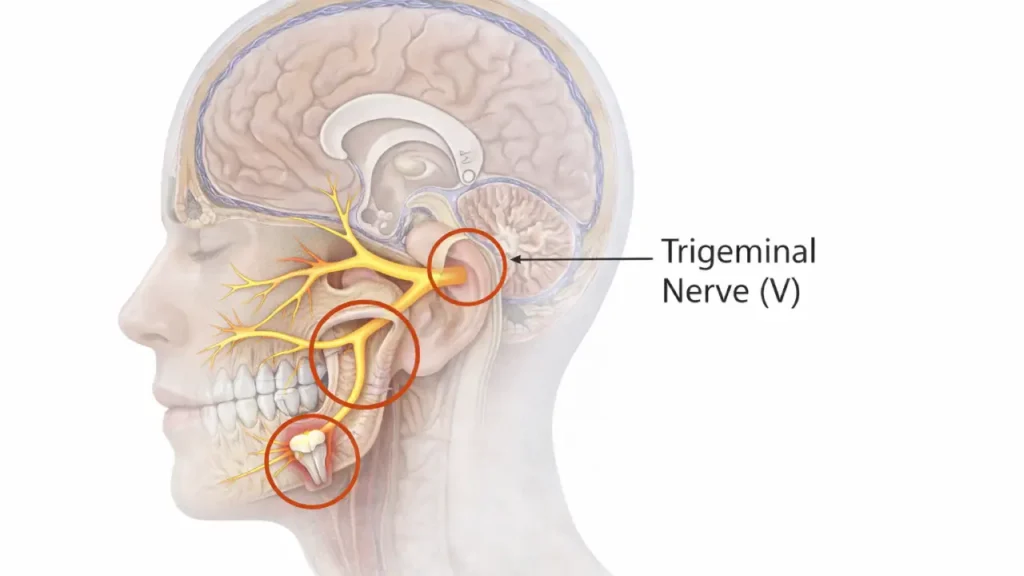
Pain in one part of your face can sometimes be felt somewhere else. This is called referred pain. The teeth, jaw, gums, and much of the face receive sensation through branches of the trigeminal nerve, so pain signals from a tooth or jaw structure can be difficult to pinpoint.
That is why an irritated or infected tooth may feel like an earache, and why a painful jaw joint can sometimes be perceived as pain in or around the ear. The overlap does not mean every earache comes from a tooth, but it explains why dental and jaw conditions are important possibilities when symptoms occur together on one side.
Can a Tooth Infection Cause Jaw and Ear Pain?
Yes. A tooth infection or dental abscess can cause pain that spreads into the jaw and surrounding areas, and some patients perceive that pain near the ear. An abscess can develop when bacteria reach the pulp inside a tooth through deep decay, a crack, trauma, or another pathway.
Possible signs of a dental abscess include:
- Throbbing or persistent tooth pain
- Pain when chewing, biting, or tapping on a tooth
- Swollen or red gums
- A pimple-like bump on the gum
- A bad taste or drainage in the mouth
- Facial or jaw swelling
- Fever or feeling unwell in more serious infections
An abscess needs professional dental treatment. The appropriate treatment depends on the source and extent of the infection and may include drainage, root canal therapy, or extraction when a tooth cannot be saved.
Could It Be a Deep Root Infection? (Signs You Might Need a Root Canal)
Before or alongside an abscess, the pulp inside a tooth can become inflamed or infected. This can produce severe tooth pain that radiates through the jaw and may be felt toward the ear.
Symptoms that can suggest pulp involvement include lingering sensitivity to hot or cold, severe pain while chewing or biting, swollen or tender gums, a chipped or cracked tooth, or deep decay. However, symptoms alone cannot tell you whether a root canal is necessary.
At Vela Dental, Dr. Vela can examine the tooth and use dental imaging and other diagnostic tests to determine whether the pulp is affected. When the pulp is irreversibly inflamed or infected, root canal treatment may be recommended to remove the damaged tissue, disinfect the inside of the tooth, and preserve the natural tooth when possible.
| Having Severe Tooth, Jaw or Ear Pain?
If the pain is intense, persistent, or accompanied by swelling, do not try to diagnose the source at home. Vela Dental offers urgent dental evaluation in Corpus Christi. |
Is TMJ to Blame for My Earache and Jaw Pain?
It can be. The temporomandibular joints sit just in front of the ears and connect the lower jaw to the skull. Temporomandibular disorders (TMDs) affect the jaw joints and/or the muscles that control jaw movement.
TMD symptoms can include jaw or chewing-muscle pain, stiffness, painful clicking or popping, limited movement, locking of the jaw, and pain that spreads into the face or neck. Some people also experience ear-related symptoms such as ringing or a sensation of discomfort near the ear.
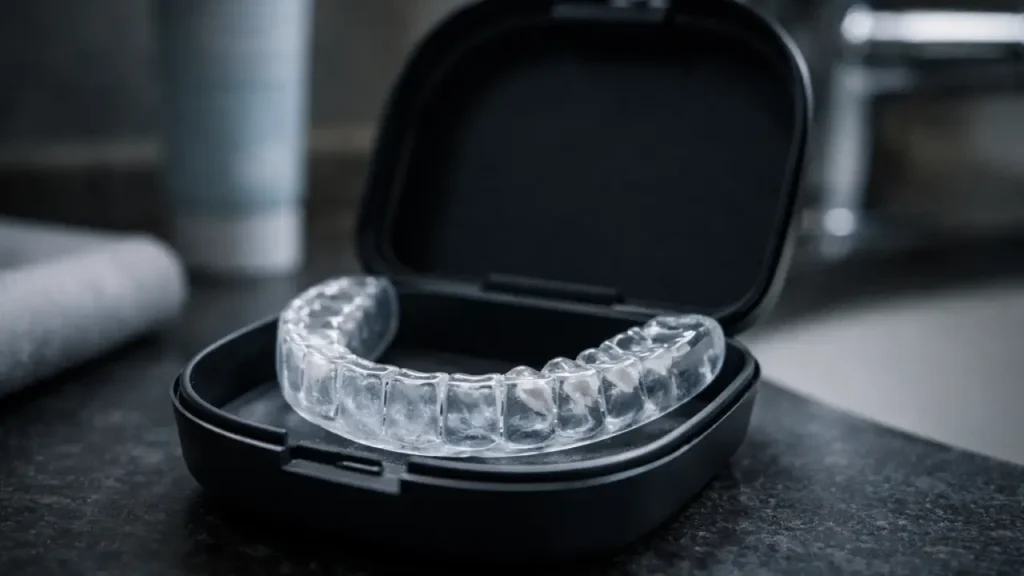
Grinding or clenching can contribute to jaw-muscle soreness in some patients, but it is not the only possible cause of TMD. Because jaw and facial pain can have many causes, a dentist or physician may need to rule out other problems before diagnosing a TMD.
Why Does My Jaw and Ear Hurt When I Open My Mouth?
Pain that becomes worse when opening your mouth can point toward the jaw joint or chewing muscles, especially when it occurs with stiffness, painful clicking, limited movement, or locking. TMD is one possibility.
However, difficulty opening the mouth can also occur with inflammation or infection around a wisdom tooth or with a more serious dental infection. If your ability to open your mouth is becoming more limited, especially with swelling or fever, contact a dentist promptly rather than assuming the problem is only TMJ.
Can Impacted Wisdom Teeth Make My Ear Hurt?
Yes. Impacted or partially erupted wisdom teeth can cause pain and swelling at the back of the jaw. When a wisdom tooth only partially breaks through the gum, bacteria and food debris can collect around the area and contribute to inflammation or infection called pericoronitis.
Pain from the back of the mouth may spread through the jaw and be perceived near the ear on the same side. Other warning signs can include swollen or tender gum tissue behind the last molar, jaw stiffness, a bad taste, or discomfort when chewing.
If a wisdom tooth is causing repeated pain or infection, a dental examination and imaging can help determine whether monitoring or wisdom teeth removal is appropriate.
Could Jaw and Ear Pain Come From Something Other Than a Tooth?
Yes. Not all one-sided jaw and ear pain is dental. That is one reason this symptom can be difficult to self-diagnose.
Other possibilities can include:
- Ear conditions, including an ear infection
- Sinus inflammation or pressure, which can sometimes be felt in the upper teeth and face
- Temporomandibular disorders or muscle-related jaw pain
- Salivary gland problems that cause facial or jaw swelling or pain
- Nerve-related facial pain
- Injury or other medical conditions affecting the face, jaw, or surrounding structures
If a dental examination does not identify a tooth or jaw source, your dentist may recommend evaluation by your physician or another appropriate healthcare professional. Ear drainage, hearing changes, significant sinus symptoms, neurologic symptoms, or pain that clearly does not involve the teeth should also be discussed with a medical professional.
What Will a Dentist Check When Tooth, Jaw, and Ear Pain Occur Together?
Because referred pain can make the source difficult to identify, the goal of the dental exam is to determine whether the pain begins in a tooth, the gums, a wisdom tooth, the jaw joint, or another oral structure.
Depending on your symptoms, a dentist may:
- Ask where the pain begins, where it travels, and what makes it better or worse
- Check teeth for decay, cracks, damaged restorations, or tenderness
- Evaluate the gums for swelling, drainage, or signs of infection
- Test whether biting or tapping on a tooth reproduces the pain
- Assess temperature sensitivity or pulp health when a root problem is suspected
- Examine wisdom teeth and the tissues at the back of the mouth
- Check jaw movement, tenderness, clicking, or limited opening
- Take dental X-rays or other imaging when needed
The examination may reveal a straightforward dental cause, or it may show that the symptoms are more consistent with a jaw-joint or non-dental problem. That distinction matters because treatment should address the actual source of the pain rather than the location where you happen to feel it.
For routine diagnostic care, learn more about general dentistry in Corpus Christi.
How Can I Relieve Jaw and Ear Pain at Home?
Home care may temporarily reduce discomfort while you arrange an evaluation, but it should not be used to delay care when pain is severe or an infection is possible.
- Avoid chewing on the painful side and choose softer foods if biting worsens symptoms.
- Use a cold compress on the outside of the face when swelling or sharp dental pain is present.
- For muscle-related jaw discomfort, gentle heat may feel more comfortable for some people.
- If over-the-counter pain medicine is safe for you, use it only as directed on the label. Ask a dentist, physician, or pharmacist if you are unsure which option is appropriate for you.
- Keep your head slightly elevated if lying flat seems to increase throbbing discomfort.
Do not place aspirin directly against a painful tooth or gum. Aspirin placed on oral tissue can cause irritation or a chemical burn.
These measures can help manage symptoms, but they cannot treat an abscess, infected pulp, impacted wisdom tooth, or another condition that requires professional care.
When Tooth, Jaw and Ear Pain May Require an Emergency Dentist
Tooth, jaw, and ear pain does not always require an emergency appointment. However, prompt dental evaluation is appropriate when symptoms suggest a significant infection, dental injury, or rapidly worsening problem.
Contact a Dentist Promptly for These Symptoms
- Severe, persistent, or worsening tooth or jaw pain
- Facial, cheek, gum, or jaw swelling
- Fever with dental pain or swelling
- Pus, drainage, or a persistent bad taste near a painful tooth
- Pain that prevents normal eating or sleeping
- Increasing difficulty opening your mouth
- A broken, cracked, or injured tooth with significant pain
- Pain or swelling around an impacted or partially erupted wisdom tooth
Vela Dental offers same-day emergency care during regular business hours for urgent problems such as severe toothaches, infections, broken teeth, and other dental emergencies. Learn more about our emergency dentist in Corpus Christi.
When to Seek Emergency Medical Care
Some symptoms can signal a problem that extends beyond a routine dental emergency. Seek emergency medical care if you have significant facial or neck swelling that affects breathing or swallowing, uncontrolled bleeding, major facial trauma, or other severe symptoms that feel life-threatening.
| Having Severe Tooth, Jaw or Ear Pain? Contact Vela Dental
You do not need to determine whether the pain is coming from a tooth, the jaw joint, or a wisdom tooth before you call. Tell our team what you are experiencing so we can help determine how urgently you should be evaluated. |
Frequently Asked Questions
Can tooth pain radiate to the ear?
Yes. Dental pain can be referred to nearby areas of the face and may be perceived around the jaw or ear. Tooth sensitivity, biting pain, gum swelling, or a known dental problem make a dental source more likely, but an examination is needed to identify the cause.
What causes jaw and ear pain on the left side?
The side of the pain does not identify the diagnosis. Left-sided jaw and ear pain can come from a tooth problem, TMD, an impacted wisdom tooth, an ear or sinus condition, or another cause. Look at the accompanying symptoms rather than the side alone.
Why do my jaw and ear hurt when I open my mouth?
Pain with jaw movement can occur with TMD or irritated chewing muscles. It can also occur when swelling or infection around a wisdom tooth or other dental infection limits jaw opening. Worsening restriction, fever, or swelling warrants prompt evaluation.
Can a wisdom tooth cause ear and jaw pain?
Yes. An impacted or partially erupted wisdom tooth can cause pain and inflammation at the back of the jaw, and that discomfort may radiate toward the ear on the same side.
Can a dental abscess cause jaw and ear pain?
A dental abscess can cause significant tooth and jaw pain, swelling, and referred discomfort in nearby areas. Abscesses require dental treatment and should not be managed with home remedies alone.
Get Tooth, Jaw and Ear Pain Evaluated in Corpus Christi
Pain affecting your tooth, jaw, and ear on one side can be confusing because several dental and medical conditions can produce similar symptoms. The safest next step is to focus on the pattern of symptoms and have the appropriate professional identify the source.
If you have tooth sensitivity, pain when biting, gum swelling, a painful wisdom tooth, or severe one-sided facial pain, contact Vela Dental for an evaluation. If your symptoms are severe or rapidly worsening, visit our Emergency Dentist Corpus Christi page or call 361-254-6657.
About the Medical Reviewer
Benjamin Vela, DDS provides general, restorative, cosmetic, and urgent dental care at Vela Dental Cosmetic & Implant Center in Corpus Christi, Texas.
Medical Disclaimer
This article is for general educational purposes and is not a substitute for an examination, diagnosis, or individualized treatment recommendation from a licensed dentist or physician. If you have severe facial swelling, difficulty breathing or swallowing, uncontrolled bleeding, major facial trauma, or other life-threatening symptoms, seek emergency medical care.
